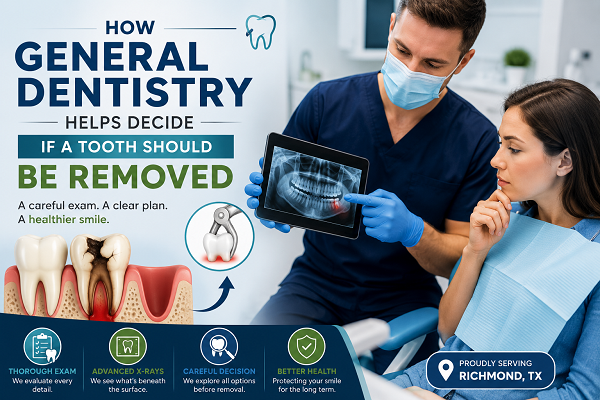
When I think about tooth removal I do not see it as the first choice. I see it as the last careful step when a tooth can no longer stay healthy or safe. In general dentistry the goal is always to protect the natural teeth whenever possible. However some teeth become too damaged, infected, loose or painful to save. That is when a dentist may talk about extraction.
I know the idea of removing a tooth can make many people nervous. Still a clear dental exam can help patients understand why it may be needed. A dentist looks at the tooth gums bone pain level infection risk and future oral health before making that choice. This is why general dentistry tooth extraction is not a quick guess. It is a careful decision based on the full condition of the mouth. If a tooth is causing pain or infection then tooth extraction dentistry may help protect the rest of the smile.
Also tooth extraction is not always about pain. Sometimes a tooth feels fine but has deep damage under the surface. In other cases gum disease has made the tooth weak. So the dentist uses exams and X rays to see what the eyes cannot see. This helps the dentist decide if treatment can save the tooth or if removal is the safer choice.
Why a Dentist Does Not Rush Tooth Removal
I believe a good dentist should always look for ways to save a natural tooth first. Natural teeth help with chewing, speaking and keeping the jaw balanced. Because of this tooth removal should only happen when there is a strong reason.
First the dentist checks if the tooth can be repaired. A filling may help if the cavity is small. A crown may help if the tooth is cracked but still strong. Root canal treatment may help if the infection is inside the tooth but the outer structure is still stable. However these options may not work if the damage is too deep or the tooth is too weak.
Also a dentist thinks about long term health. A tooth may be patched for a short time but still fail soon after. Therefore the dentist must decide if saving the tooth will truly help the patient. If the tooth keeps causing infection or pain then extraction may be the healthier option.
The Dental Exam Comes First
Before a dentist recommends extraction the dental exam gives important answers. I see this step as the starting point for every smart decision. During the exam the dentist checks the tooth from different angles. The dentist may ask about pain swelling, chewing problems, bad taste or past dental work.
Then the dentist checks the gums around the tooth. Healthy gums help hold teeth in place. However gum disease can damage the tissue and bone around the tooth. If the tooth has very little support left then it may become loose. In that case saving the tooth may not be possible.
Also the dentist checks how the tooth fits with the bite. A tooth that is cracked or weak may face heavy pressure every day. Because of this it can hurt more or break further. So the dentist looks at the full mouth and not just one tooth.
Why X Rays Matter in Tooth Extraction Decisions
X rays help the dentist see what is happening under the gums and inside the tooth. This is important because many serious problems are hidden. A tooth may look normal from the outside but have deep decay near the root. Also an infection may spread near the jawbone before the patient sees swelling.
With X rays the dentist can check the root shape bone level and infection area. This helps decide if the tooth can be saved. For example a tooth with strong roots and enough healthy structure may still have treatment options. However a tooth with deep cracks below the gum line may need removal.
In Richmond, Tx many patients visit a dentist because they feel pain but do not know the cause. X rays can make the problem clear. Then the dentist can explain the best choice in simple words.
When Severe Tooth Decay May Lead to Extraction
Tooth decay is one of the most common reasons a tooth may need to be removed. At first decay may only affect the outer layer. At that stage a filling can often repair the tooth. However decay can spread deeper when it is not treated early.
Once decay reaches the inner part of the tooth it can cause pain and infection. A root canal may help in many cases. However the tooth still needs enough healthy structure to hold a filling or crown after treatment. If too much tooth has been lost then saving it may not work well.
Also severe decay can spread bacteria to nearby areas. This may cause swelling, bad breath, bad taste or jaw pain. Therefore extraction may protect the mouth when the tooth cannot be repaired.
When Infection Makes Removal the Safer Choice
An infected tooth can become serious if it is ignored. I always think tooth infection should be handled early because it can spread. An infection may start inside the tooth after deep decay trauma or a crack. It can then move toward the root and nearby bone.
Sometimes root canal treatment can remove the infection and save the tooth. However this depends on the tooth condition. If the tooth has a large crack or very weak structure then root canal treatment may not be enough. In that case extraction may help stop the infection from coming back.
Also swelling in the gums or face can be a warning sign. It may mean the infection has grown. So a dentist must check it quickly and decide the safest treatment.
How Broken or Cracked Teeth Are Checked
A broken tooth does not always need extraction. Sometimes a crown or bonding can repair it. However the depth and direction of the break matter. If the crack stays above the gum line then the dentist may save the tooth. If the crack goes below the gum line then extraction may be needed.
Also some cracks are hard to see. The tooth may hurt only when chewing or when the pressure is released. Because of this the dentist may use bite tests and X rays to find the issue. The dentist may also check if the tooth moves or if the gums around it are swollen.
A general dentistry tooth extraction plan may be needed when the tooth is split or cannot hold a strong repair. Although this can feel disappointing it may prevent more pain later.
Gum Disease and Loose Teeth
Gum disease can damage the support around teeth. At first gums may bleed or feel tender. Later the bone around the teeth may shrink. When this happens a tooth may loosen because it no longer has enough support.
In some cases deep cleaning and gum treatment can help protect the teeth. However advanced gum disease can cause serious bone loss. If a tooth moves too much or causes pain then a dentist may recommend removal.
Also keeping a very loose tooth may affect nearby teeth. It can trap bacteria and make cleaning harder. Therefore extraction can sometimes help protect the rest of the mouth.
Why Crowding or Orthodontic Needs May Lead to Extraction
Sometimes teeth are removed because there is not enough room in the mouth. This may happen before braces or other orthodontic treatment. However the dentist or orthodontic provider must study the bite and tooth position first.
Crowded teeth can be hard to clean. Because of this plaque can collect between tight spaces. Over time this may increase the risk of cavities and gum problems. If removing a tooth helps create a healthier bite then it may be part of a larger treatment plan.
Still this decision should be made carefully. A dentist will not remove a tooth for crowding unless it supports the full dental plan.
Wisdom Teeth and General Dentistry
Wisdom teeth often cause problems because they come in late. Some have enough room and stay healthy. However, many wisdom teeth do not have enough space. They may grow at an angle or stay partly trapped under the gums.
When wisdom teeth are partly covered by gum tissue food and bacteria can get stuck. This can cause swelling pain or infection. Also wisdom teeth may push against nearby molars. So a dentist may suggest removal before the problem gets worse.
In many cases wisdom tooth removal is planned after a dental exam and X rays. This helps the dentist see the tooth position and choose the safest approach.
How Pain Helps Guide the Decision
Pain gives useful clues but it does not tell the whole story. A tooth can hurt because of decay infection cracks gum issues or bite pressure. Therefore the dentist must find the real cause before choosing treatment.
Sharp pain may point to a crack or exposed nerve. Throbbing pain may point to infection. Pain while chewing may mean the tooth is damaged or under pressure. However some damaged teeth cause little pain at first. So the dentist uses both symptoms and exam results.
If pain keeps returning after treatment or if the tooth has no strong repair option then extraction may be considered.
Why the Dentist Looks at the Whole Mouth
A dentist does not only look at the problem tooth. The full mouth matters. The dentist checks nearby teeth, gums, bones and bites. This helps show how one tooth affects the rest of the smile.
For example a damaged tooth may collect bacteria and affect nearby gums. A loose tooth may make chewing uneven. An infected tooth may spread pain to the jaw or nearby teeth. Therefore extraction may protect more than one area.
Also the dentist may talk about tooth replacement after extraction. This is important because missing teeth can affect chewing and spacing. A bridge implant or denture may be discussed depending on the patient’s needs.
How Patients Can Feel More Comfortable About the Decision
I know tooth extraction can sound scary. However, clear communication makes a big difference. A dentist should explain why the tooth may need removal and what other options were considered. Patients should also understand what will happen before, during and after the visit.
A patient can ask simple questions such as why the tooth cannot be saved. They can also ask what happens after the extraction. This helps them feel more in control. At a general dentist clinic in Richmond Tx patients can discuss their symptoms and learn which treatment choice fits their oral health needs.
Also modern dental care focuses on comfort. The dentist can use numbing and careful techniques to make treatment easier. After the visit the patient gets care instructions for healing.
What Happens After a Tooth Is Removed
After extraction the body starts healing right away. The dentist gives instructions to help protect the area. These may include resting, avoiding straws, eating soft foods and keeping the mouth clean.
Also follow up care matters. The dentist may check healing and discuss tooth replacement if needed. Replacing a missing tooth can help keep nearby teeth from shifting. It can also support chewing and smile balance.
In Richmond, Tx patients often want to know how soon they can return to normal life. Many people feel better within a few days. However, healing time can vary based on the tooth and the patient’s health.
Key Takeaways
- A dentist removes a tooth only when saving it may not be safe or useful.
- General dentistry helps check tooth damage, infection, gum health and bone support.
- Tooth extraction can sometimes protect nearby teeth and prevent bigger dental problems.
Final Thoughts
General dentistry helps decide if a tooth should be removed through careful exams X rays and honest planning. A dentist looks at decay infection cracks gum health bone support and the full bite before making a decision. Because of this tooth extraction is not a random choice. It is a health based step when saving the tooth may not be safe or strong enough.
I believe the best dental care starts with clear answers. If a tooth can be saved then a dentist should explain the options. However if removal is the better choice then the patient should understand why. In Richmond, Tx a thoughtful dental visit can help patients protect their comfort oral health and long term smile.