Modern kitchens often use clean cabinet lines, simple lighting, open layouts, and carefully controlled colors. However, a room with only smooth manufactured surfaces can sometimes feel too plain. Natural stone can add variation and depth while keeping the design refined. For homeowners in Dublin, Columbus, Ohio, quartzite may provide that balance because each slab has its own natural movement and character. However, homeowners should choose quartzite according to the entire kitchen rather than focusing only on the slab. Cabinets, backsplash, flooring, appliances, lighting, sink design, and room size all influence how the stone will look once installed.
Decide How Much Natural Movement the Kitchen Needs
When considering quartzite kitchen countertops, homeowners should first decide whether the stone will become the main feature or support another design element. Some quartzite slabs contain soft, flowing movement, while others create much stronger contrast. Therefore, the right choice depends on what is already happening in the room. A simple cabinet style can support more dramatic stone. Meanwhile, highly detailed cabinetry may work better with a quieter slab.
Key Takeaways
- Choose quartzite according to the cabinet style, lighting, flooring, and overall kitchen palette.
- View full slabs whenever possible because natural patterns can vary greatly.
- Use the backsplash, hardware, and lighting to support the stone rather than compete with it.
Understand Why Full-Slab Viewing Matters
Natural stone cannot be judged fully from a small sample. Therefore, homeowners should view the largest possible section. A sample may show the background color but miss larger movement across the slab. This becomes especially important when planning a large kitchen island. The most attractive vein pattern may need to be positioned across a specific area. Therefore, slab layout becomes part of the design process.
Pair Quartzite With White Cabinets
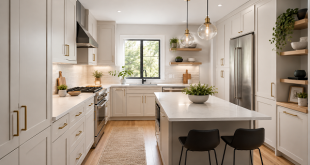
White cabinets can create a clean background for natural stone. Therefore, quartzite movement can become more noticeable. Soft gray veins may create a light and airy appearance. Meanwhile, darker movement can add contrast. Warm quartzite may also prevent white cabinets from feeling too cold. Therefore, homeowners should compare undertones carefully.
Use Quartzite With Wood Cabinets
Natural wood and natural stone can create a warm, layered kitchen. However, both materials contain visual movement. Therefore, balance matters. A strongly figured wood may work better with a quieter stone. Meanwhile, simple wood grain may support more dramatic quartzite. Color connection also helps. For example, warm stone movement may pair naturally with warmer cabinet finishes.
Pair Quartzite With Dark Cabinets
Dark cabinets can make light quartzite stand out. Therefore, this combination often creates strong contrast. Navy, charcoal, black, and deep green can all provide a dramatic frame for lighter natural stone. However, enough lighting is important. Without adequate light, the darker cabinetry may make the room feel heavy. Therefore, natural light and layered artificial lighting should support the design.
Use the Island as the Main Stone Feature
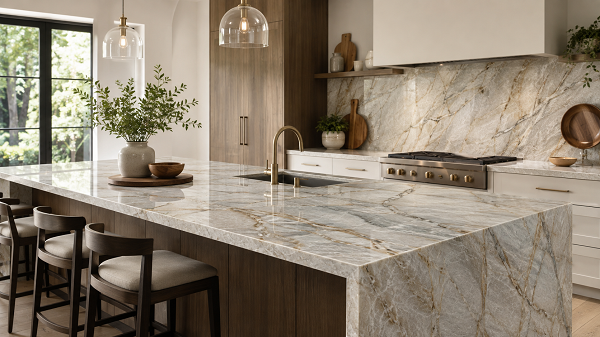
A large island provides one of the best places to display natural movement. Therefore, homeowners may choose a particularly attractive section of quartzite for this area. The perimeter can use the same stone for consistency. Alternatively, another related surface may be used. However, the island and perimeter should still look connected. The goal is contrast without visual separation.
Think About Vein Direction
Natural movement can influence how the eye travels through the kitchen. Therefore, vein direction deserves attention. Long veins running along an island can make it feel longer. Meanwhile, veins crossing the surface may create a different visual effect. Seam locations should also be considered because they may interrupt the movement. Careful planning can make the final installation look more intentional.
Coordinate the Backsplash
Quartzite often has enough natural detail to serve as the main focal point. Therefore, the backsplash may work best when it remains simple. Neutral tile can provide a quiet background. Meanwhile, a matching slab backsplash can create a more dramatic continuous look. However, the cost and available stone should be considered. The backsplash choice should support the countertop rather than compete with it.
Consider Flooring Tone
Flooring covers a large part of the room. Therefore, it should connect with the stone. Warm wood floors may work beautifully with quartzite containing beige, cream, or warm gray movement. Cooler flooring may support stone with cleaner whites or blue-gray tones. However, perfect matching is unnecessary. Compatible undertones create a more natural result.
Use Lighting to Show the Stone
Natural stone changes under different lighting. Therefore, homeowners should look at samples in daylight and artificial light. Pendant lighting over an island can highlight the movement of stone. Likewise, under-cabinet lighting can improve visibility along perimeter countertops. In Dublin, Columbus, Ohio, seasonal daylight changes may affect how the stone appears. Therefore, the kitchen should have sufficient artificial lighting to maintain its intended look year-round.
Consider the Sink Cutout
A sink removes a noticeable part of the countertop. Therefore, its position should be planned in relation to the slab pattern. An undermount sink can keep the countertop edge visible.However, homeowners should also consider bowl size. A very large sink may remove more of an attractive vein pattern. Therefore, layout should balance practical use with visual design.
Plan Faucet Placement
Faucet holes need accurate positioning. Therefore, the faucet and any accessories should be selected early. A soap dispenser, filtered-water tap, or other feature may require additional holes. Likewise, a tall faucet may need enough space near a window or backsplash. Planning early prevents last-minute changes.
Select an Edge That Supports the Stone
Natural stone often needs little decoration to look impressive. Therefore, a simple edge profile can work well. Clean edges support modern and transitional kitchens. Meanwhile, a more decorative edge may suit traditional cabinetry. However, the edge should not compete with strong stone movement.
Compare Stone With Other Materials
Viewing quartzite alone can make selection harder. Therefore, homeowners should compare the slab with cabinet doors, flooring, tile, hardware, and paint. Visiting countertop stores can make this comparison easier because homeowners can view materials at a larger scale. This process also helps reveal undertones that may not appear clearly in online images.
Think About Natural Variation
Every natural stone slab has unique characteristics. Therefore, homeowners should expect variation. This is one reason many people choose quartzite. The surface does not look printed or repeated. However, natural variation means the homeowner should approve the actual material rather than relying only on a product name.
Keep the Rest of the Kitchen Controlled
A dramatic natural countertop may already provide enough visual interest. Therefore, cabinets, flooring, hardware, and backsplash do not all need to become focal points. A simple cabinet profile can frame the stone. Likewise, quiet flooring can create a stable base. This balance can make the kitchen feel more expensive and carefully designed.
Consider Appliance Finishes
Appliances create another major visual element. Therefore, their finish should work with the stone and cabinetry. Stainless steel provides a neutral option. Black appliances can create contrast. Meanwhile, panel-ready appliances can help cabinetry remain the main background. The strongest choice depends on the overall kitchen style.
Repeat Small Stone Colors Elsewhere
A quartzite slab may contain gray, brown, cream, gold, or darker mineral colors. Therefore, small elements can repeat these tones. Hardware may connect with a darker vein. Pendant lights may repeat warmer colors. Likewise, stools or décor may reflect subtle shades found in the stone. These small connections can unify the room.
Plan Seams With Care
Large kitchens may need more than one countertop section. Therefore, seams should be positioned thoughtfully. Structural support matters, but appearance also matters. Strong vein patterns can make some seam locations more noticeable. Therefore, slab planning should happen before cutting begins.
Think About Long-Term Style
Natural materials often work across several design trends. However, the surrounding choices still matter. Simple cabinets, balanced lighting, and controlled backsplash designs can help quartzite remain flexible over time. Therefore, homeowners should avoid adding too many permanent trend-driven elements at once. Paint and decorative pieces are easier to update later.
Understand Maintenance Expectations
Every countertop material has care needs. Therefore, homeowners should understand the recommendations for the specific quartzite they select. Daily habits can also help protect the surface. Using suitable cleaning products and addressing spills promptly can support long-term appearance. The important point is knowing the maintenance expectations before installation.
Use Quartzite to Add Warmth to Minimal Kitchens
Very minimal kitchens sometimes need natural texture. Therefore, quartzite can soften a room filled with flat cabinets, smooth appliances, and simple flooring. The natural pattern creates visual depth without adding decorative molding or multiple colors. As a result, the kitchen can stay modern while feeling less cold.
Final Thoughts
Quartzite can bring natural movement and character into many kitchen styles. However, the strongest designs consider the entire room. Cabinets, flooring, lighting, backsplash, sink, appliances, and stone should support one another. For homeowners in Dublin, Columbus, Ohio, viewing full slabs and comparing surrounding materials can lead to a more confident choice. Ultimately, the best quartzite countertop adds personality while still keeping the kitchen balanced, practical, and comfortable for everyday use.